






TRACCS calls for national framework for passenger rail projects
Canada risks overspending and under-delivering on passenger rail projects as it embarks on one of the largest infrastructure investments in its history, says the Transit Rail Association for Canadian Construction Standards (TRACCS).
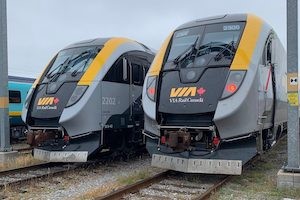 The group is calling for a national regulatory framework to guide how passenger rail is planned, built, and maintained. Such a framework, it says, could help structure and deliver the Alto rail project far more efficiently than traditional methods.
A database of global transit that is maintained by NYU’s Marron Institute shows that Canadian rail projects can cost more than $1.2 billion per kilometre. That figure is up to four times higher than similar projects in Europe which average about $250 million per kilometre.
“Canada spends up to 50 percent of every rail dollar on planning, management, and advisory costs, while the global benchmark is closer to 20 percent," says TRACCS Chair Mark Salsberg. "It's not sustainable. There's no reason our taxpayers should pay four times more than other countries."
The association warns that Canada's major rail projects are also being delivered years behind schedule. Projects experience repeated delays due to fragmented oversight, inconsistent standards, and duplicated and often redundant approval processes.
"Our delivery model has become overly bureaucratic," says Salsberg. "Too many layers of advisors and consultants means decisions that should take weeks now take months and sometimes years. Meanwhile, taxpayers are footing the bill."
In contrast, countries such as Spain, France and Japan operate under clear national frameworks that enable faster approvals, standardized designs, and consistent workforce training.
Salsberg argues that the issue is not a lack of funding but a lack of understanding, accountability, and the need for national passenger-rail standards, training, supplier assurance, efficiency, and national coordination.
"Everyone says we need more money, but that's not always the answer," he says. "The real solution is to improve standards, streamline procurement, and invest in Canadian talent so we can build smarter and faster."
TRACCS has proposed a National Framework for Passenger Rail Delivery that is built on four pillars:
- Establish clear, consistent technical and safety benchmarks for all projects
- Build workforce capacity through hands-on programs such as TTC's award-winning Hands On Training Centre.
- Simplify and modernize bidding and contracting systems to reduce overhead and duplication.
- Ensure every worker, contractor, and supplier meets verified best-practice thresholds for skills, safety, and quality.
"We don't need to reinvent the wheel. Just look at the model of excellence within the TTC's Hands On Training Centre, which is already producing the next generation of skilled rail professionals," says Salsberg. "If we want to use tax dollars wisely and get passengers moving faster, we need a national strategy and we need it now."
TRACCS is a national non-profit that represents more than 100 companies and passenger rail agencies employing tens of thousands of workers.