






IO issues RFQ for Windsor hospital project
Infrastructure Ontario (IO) and Windsor Regional Hospital have issued a request for qualifications for the Windsor Regional Hospital – The Fancsy Family Hospital Project: Contract 1 Diagnostic and Treatment Block.
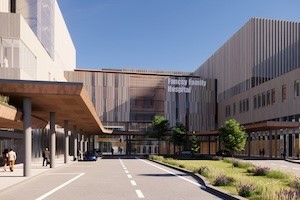 The Fancsy Family Hospital is being delivered in three phases, with the hospital leading the enabling works projects and Infrastructure Ontario overseeing the tendering process for the final two phases in two distinct contracts.
The choice to adopt a segmented approach to construction, IO says, reflects project needs, current market conditions and industry feedback. IO expects that by dividing the remaining work into two contracts, the project will attract strong competition and achieve better value for taxpayers.
Contract 1 consists of the hospital’s Diagnostic and Treatment Block. It is being delivered through IO’s Design-Build-Finance-Maintain model.
The Diagnostic and Treatment Block is currently planned as a five-storey structure which will serve as the primary public entrance to the Fancsy Family Hospital and house a majority of outpatient services and public spaces.
The block will include the emergency department, including a regional trauma centre and helipad, a regional cancer centre, surgical services, a catheterization lab, women’s and children’s services with maternal newborn, paediatrics and the neonatal intensive care unit, critical care, diagnostic imaging, laboratory, and pharmacy.
Contract 2 will be procured separately and will include an in-patient tower, currently planned as nine storeys.
The RFQ is the first step in the process to select a team to help deliver Contract 1. The aim of the process is to create a short list of teams with the required design and construction experience to executive the project. Those teams will then be invited to respond to a Request for Proposals, which is expected to be released in the fall.
Once complete, the Fancsy Family Hospital Project will increase healthcare capacity in the Windsor-Essex county and address the significant need for more specialized care for patients.